
"coffee rust in Asia"
500 article(s) found

Java boutique coffee beans Arabica coffee
Among the Asian coffee-producing countries, Indonesia is a very noteworthy one. Indonesia is an island country in the Indian Ocean, the islands are distributed on both sides of the equatorial line, of which three islands: Java, Sumatra and Sulawesi produce the most important coffee in the world. In the mid-17th century, the Dutch brought coffee trees to Ceylon (now known as Sri Lanka) and Java in Indonesia. The 18th century
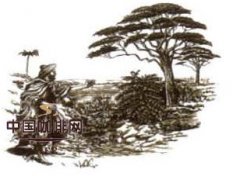
Coffee Culture Common Sense Coffee Spread History (I)
In 622 Muhammad, the prophet of Islam, led the pilgrimage of believers from Mecca to Medina, and began to establish a religious state, which developed into a powerful empire spanning Central Asia to Liberia in the next century. Ethiopia, the origin of coffee, was included in the Islamic Empire and maintained its independence as a Christian state. Coffee began to spread from Ethiopia to Afghanistan in the 10th and early 11th centuries.

Indonesian coffee, Java, rich coffee.
Among the Asian coffee-producing countries, Indonesia is a very noteworthy one. Indonesia is an island country in the Indian Ocean, the islands are distributed on both sides of the equatorial line, of which three islands: Java, Sumatra and Sulawesi produce the world's important coffee. In the mid-17th century, the Dutch brought coffee trees to Ceylon (Sri Lanka) and Java, Indonesia. India in the 18th century

Java coffee flavor Java coffee characteristics
Among the Asian coffee-producing countries, Indonesia is a very noteworthy one. Indonesia is an island country in the Indian Ocean, the islands are distributed on both sides of the equatorial line, of which three islands: Java, Sumatra and Sulawesi produce the world's important coffee. In the mid-17th century, the Dutch brought coffee trees to Ceylon (Sri Lanka) and Java, Indonesia. India in the 18th century

A brief introduction to the difference of the original species of the three Coffee beans Tibica Coffee varieties have excellent flavor genes
Professional coffee knowledge exchange more coffee bean information please follow the coffee workshop (Wechat official account cafe_style) front street-brief introduction of the three major varieties of coffee Arabica species (Arabica), Robusta species (Robusta), Liberika species (Liberica), but most of the varieties in circulation in the market are Arabica and Robusta. No matter what it is, it has its advantages and disadvantages.

The best producing area of growing coffee beans in China the taste characteristics of Yunnan small grain coffee is sour and bitter.
Professional coffee knowledge exchange more coffee bean information please follow the coffee workshop (Wechat official account cafe_style) Qianjie-Yunnan Coffee introduction talk about Yunnan Province, which is currently the only high-quality coffee raw material production base in China, and it is also the earliest place to grow coffee in Chinese mainland area. Even if it is

Sumatran Coffee Disease what are the characteristics of Sumatran coffee
Professional coffee knowledge exchange more coffee bean information please follow the coffee workshop (Wechat official account cafe_style) front street-Sumatran Coffee introduction Manning Coffee: Mandarin Coffee is produced in Sumatra, Indonesia, Asia, also known as Sumatran Coffee. Her flavor is very rich, fragrant, bitter, mellow, with a little sweetness. Generally speaking, most coffee lovers drink on their own.
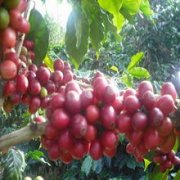
Coffee knowledge three native species of coffee
Coffee is mainly divided into three categories: Arabica (Arabica), Robusta (Robusta) and Liberia (Liberica), but Arabica and Robsta are mostly in circulation in the market. No matter what it is, it has its advantages and disadvantages, and its purpose and use are not the same. There are about 40 species of coffee plants, but only Allah can produce coffee beans of commercial value.

The spread History of Coffee Culture in the World (1)
In 622, Muhammad, the prophet of Islam, led the believers to migrate from Mecca to Medina and began to establish a church state, which developed into a powerful empire spanning Central Asia to the Liberian Peninsula in a century. Ethiopia, the origin of coffee, was included in the Ilan Empire and remained independent as a Christian country. Coffee began to flow from Ethiopia to Afghanistan in the early 11th century.
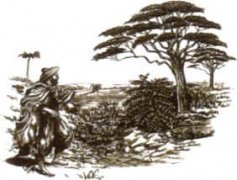
The Development of World Coffee in World History 1
In 622, Muhammad, the prophet of Islam, led the believers to migrate from Mecca to Medina and began to establish a church state, which developed into a powerful empire spanning Central Asia to the Liberian Peninsula in a century. Ethiopia, the origin of coffee, was included in the Ilan Empire and remained independent as a Christian country. Coffee began to flow from Ethiopia to Afghanistan in the early 11th century.

Practical information | Coffee genealogy collation
Coffea / Coffee consists of more than 120 species, usually opposite leaves, evergreen shrubs or small trees with horizontal branches. Contains opposite species, one side is flat, and the other side has grooves (right! It's coffee beans! ). Tropical forests are the preferred habitat for most coffee plants. There are about 60 coffee plants in the world.

What kinds of coffee do you have? What do the varieties and cultivars represent? Which coffee variety has the best quality?
Professional coffee knowledge exchange more coffee bean information please follow the coffee workshop (Wechat official account cafe_style)

Boutique coffee beans: details of Arabica and the difference between Arabica and Robusta
Arabica Coffee Coffee Arabica many people have seen roasted coffee beans, but unless you have lived or traveled to coffee producing areas, you may not know coffee trees. The saplings are short-trimmed, but when they mature, they are 30 feet tall and covered with waxy leaves that grow symmetrically in dark green. The coffee fruit grows along the branches. After the white flowers are in full bloom and pollinated, the fruit takes a year to ripen.
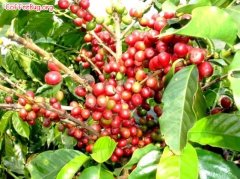
The basic knowledge of coffee beans The three original species of coffee
Coffee belongs to the evergreen shrubs of the genus Coffee of Rubiaceae, centered in tropical regions, with about 500 genera and 6000 species of Rubiaceae plants distributed here. Coffee has long been thought to have certain medicinal effects, such as invigorating stomach, refreshing mind, stopping bleeding, dissipating heat, strengthening body, etc. More famous Rubiaceae plants and gardenia, its fruit has long been dried as medicine

Sumatra Mantenin boutique coffee bean recommendation
One of the most famous and most needed coffee in Asia. The appearance of Mandarin beans is arguably the ugliest, but coffee fans say that the more ugly the Sumatran coffee beans are, the better, mellow and slippery they are. In the 17th century, the Dutch first introduced Arabica saplings to Ceylon (present-day Sri Lanka) and Indonesia. In 1877, a massive disaster struck Indonesia.

Arabica Coffee Variety Variety Quality Flavor Description Processing Method Taste Grindness Introduction
Arabica is a large shrub with oval, dark green leaves and oval fruits. It usually has two slightly flat beans. The bean body is small and round, the front is long oval, the middle crack is narrow and curved in S shape, and the arc shape of the back of the bean is relatively flat. Caffeine content is about 1% 1.7% Arabica coffee tree, one of the most important coffee trees in the world. The Arabica species (

Fine Coffee Science explains the spread History of Coffee in detail (1)
In 622, Muhammad, the prophet of Islam, led the believers to migrate from Mecca to Medina and began to establish a church state, which developed into a powerful empire spanning Central Asia to the Liberian Peninsula in a century. Ethiopia, the origin of coffee, was included in the Ilan Empire and remained independent as a Christian country. Coffee began to flow from Ethiopia to Afghanistan in the early 11th century.

Origin of coffee The reason why commercial coffee started Discovery of Robusta coffee beans
Coffee beans originally used by humans belong to the Arabica species. Arbica originated from Ethiopia in East Africa. It was first cultivated by Arabs in Yemen and extended to all parts of Europe and Asia. (At the time, it was only known that coffee was imported from Arab countries, and the root contained the Arabic meaning of "Arbia"). Arabic original coffee

Coffee culture the development process of coffee history in the world
In 622, Muhammad, the prophet of Islam, led the believers to migrate from Mecca to Medina and began to establish a church state, which developed into a powerful empire spanning Central Asia to the Liberian Peninsula in a century. Ethiopia, the origin of coffee, was included in the Ilan Empire and remained independent as a Christian country. Coffee began to flow from Ethiopia to Afghanistan in the early 11th century.